Why Your Pain Comes Back After Dry Needling, Massage, or an Adjustment
You walk out of your appointment and your shoulder moves better than it has in months. Two days later, it’s stiff again. So was the treatment a waste of your money?
No. But it was only half the job - and here’s the part most people never get told.
Manual therapy can change how your body experiences pain and movement, but it doesn’t build the strength and capacity needed to handle more load. That’s where progressive exercise and training come in. So when we create a window where you move better and hurt less, we have to use it. If nothing gets loaded inside that window, your body has no reason to hold onto the change.
That’s how we think about manual therapy at ACTive Family Physical Therapy. It buys you a window. What we do inside that window is the actual treatment.

What That Actually Looks Like
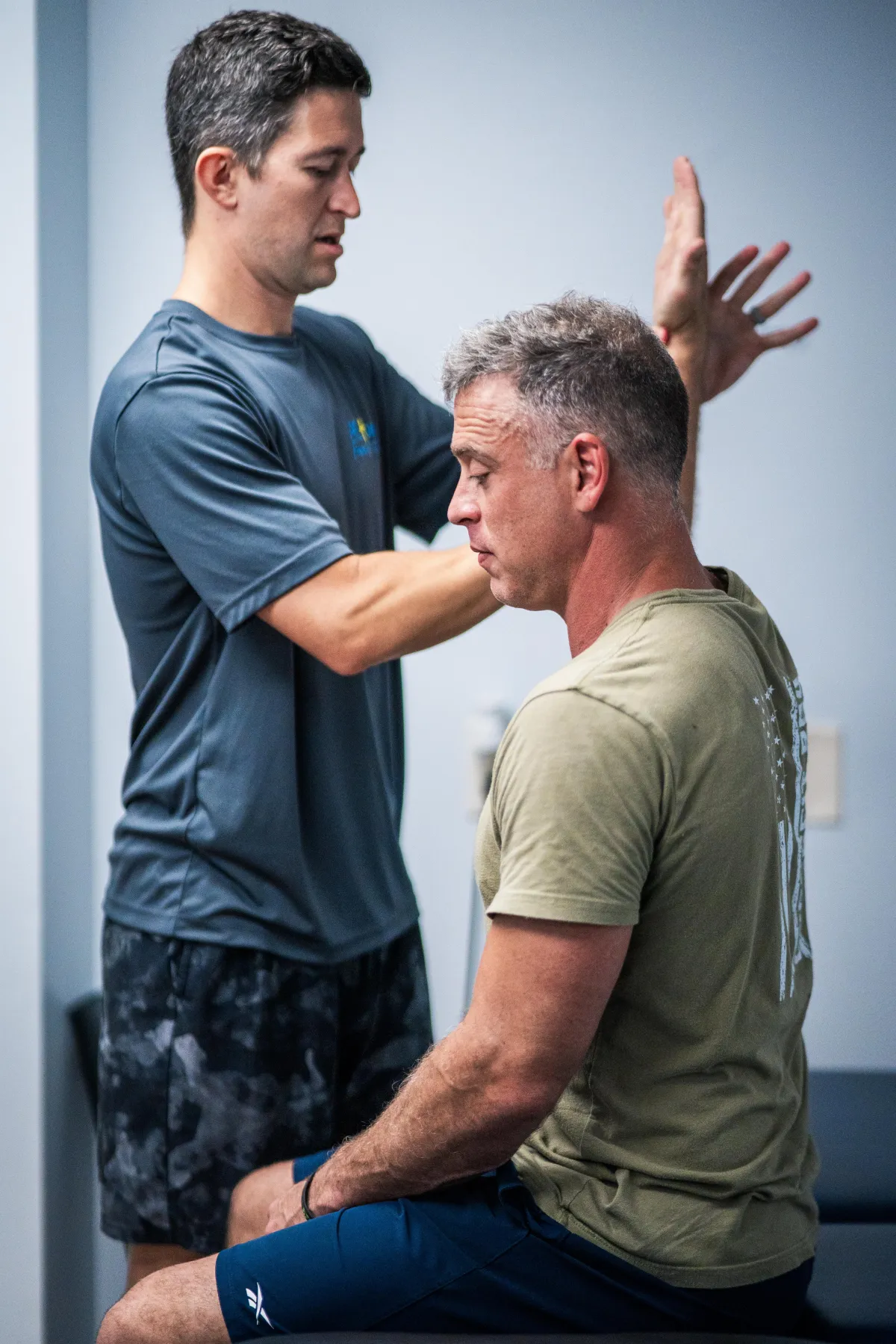
You come in with shoulder pain and can comfortably raise your arm to about 120 degrees. We treat, retest, and now you’re at 160 degrees with much less pain.
That’s a great response. But gaining that motion on the table doesn’t mean you know how to control it under load - and a range your shoulder has never been asked to work in before tends to drift back within a couple of days.
So we don’t stop. We spend the rest of that session teaching your shoulder to own the range we just gained, through active movement, strength work, and progressively more challenging tasks.
What We Mean by Manual Therapy
Manual therapy is a broad term for the hands-on techniques we use to decrease pain and improve mobility. At ACTive Family Physical Therapy, that includes:
Joint mobilizations and manipulations
Trigger point dry needling (and dry needling with electrical stimulation)
Cupping
Soft tissue work and instrument-assisted soft tissue mobilization
Mobilization with movement
The technique matters far less than the reason we picked it.

If ankle stiffness is limiting your squat, we mobilize the ankle. If pain and guarding are shutting down your shoulder, we dry needle to quiet symptoms before we work on movement and strength.
What we don’t do is reach for manual therapy because something feels “tight” or because it’s what we always do. There’s a reason we chose it, and a plan for what comes next.
Why Does Pain Come Back After Dry Needling or Manual Therapy?
Because manual therapy changes how protective your nervous system is being - not how much load your tissue can tolerate. Nothing about the tissue itself got stronger during that session. If the window closes without any training inside it, you end up back where you started.
You’ve probably also heard that a manipulation “puts something back into place,” that cupping “breaks up scar tissue,” or that a painful muscle needs a “knot released.”
The effects are more complicated than that. One of the important effects of manual therapy is how it influences your nervous system - changing pain sensitivity, muscle guarding, and how comfortable a movement feels.
That immediate change is real and useful. It is not proof that we fixed a tissue or permanently changed your structure. We changed the conditions enough to make movement easier - and that’s enough to work with.
Manual Therapy Isn’t the Opposite of Exercise
Physical therapy loves to argue about this: hands-on treatment or exercise. You don’t have to pick.
Strength and progressive loading are what create lasting change. But pain, stiffness, and guarding can make it genuinely hard to train the way you need to. If ankle stiffness is blocking your squat, we could hand you mobility drills and hope it improves over six weeks. Or we can mobilize the ankle today and squat in the range you just gained, while you still have it.
Use the right tool at the right time, then reinforce the change with movement and load.
What we’re not doing is making you dependent on us. You should never believe your back needs to be “put back in” or your muscles need to be “released” before you can function. Early on we may use hands-on work often because pain or range of motion is limiting what you can do. As you get stronger, you should need it less.
If you’re six months in and the only thing that helps is repeating the exact same treatment on the exact same problem, it’s worth asking whether the plan needs to change.

Then We Retest.
This is the part most people have never experienced, and it’s the fastest way to tell whether your treatment is doing anything.
If your shoulder hurts when you reach overhead, we measure that movement before treatment, treat, and test it again on the spot. Did the pain drop? Did the range improve? Does it feel easier?
If yes, we build on it immediately. If nothing changed, we stop and try something else. We don’t repeat a technique just because it’s on the schedule.
It’s also why two people with the same diagnosis can get completely different treatments. The goal isn’t matching a technique to a diagnosis. It’s finding what’s actually limiting you and changing it.
And some days, the best treatment involves no hands-on work at all.
Create the Window. Then Use It.
Feeling better for two days isn’t the goal. Squatting, pressing, running, swinging a club, and picking up your kids without thinking about it - that’s the goal.
Manual therapy opens the window. Strength and progressive loading help you take advantage of it.
If your pain keeps coming back after treatment that felt like it worked, you don’t need more of the same treatment. You need a plan.
At ACTive Family Physical Therapy, we work with active adults and athletes across Jacksonville, Ponte Vedra, and St. Johns County who don’t just want temporary relief - they want to understand what’s limiting them, build their body back up, and confidently return to the activities they love. You’ll find us at South Hampton, at CrossFit 904, and in Ponte Vedra at Momentum Fit.
Find out what’s actually limiting you!